

The Carpool to Dictionopolis
I was driving my daughter and her friends to school when the conversation turned to words. One of the girls announced that she hates them. Words, she said, can always mean something different. She likes numbers. Numbers are what they are. They are facts.
I'm a former English teacher, so you might expect me to have pulled the car over. I didn't, because I don't disagree. Four is always four. "Fine" is whatever the person saying it needs it to be.
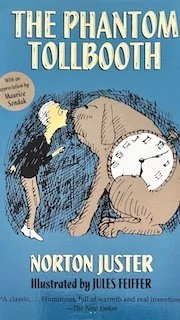
But I did think of The Phantom Tollbooth, Norton Juster's children's book about Milo, a bored boy who drives a toy car through a tollbooth and into a kingdom at war with itself. In Dictionopolis, King Azaz insists that words matter most. In Digitopolis, his brother the Mathemagician says numbers do. The princesses Rhyme and Reason ruled that the two are equally valuable and were banished for it. And there I was, a devoted resident of Dictionopolis, chauffeuring a citizen of Digitopolis to homeroom.
What I wanted to say, and didn't, because nobody wants a lecture before first period: maybe the trouble is that we aren't using words enough. A word left on its own can mean anything. It takes more of them, and usually a question or two, to pin the meaning down.
Which is why I loved a recent episode of The Diary of a CEO with guest Alison Wood Brooks, a Harvard professor who studies how we talk to each other. I've since signed up for her Talk newsletter, so every day a question lands in my email, a way to start a conversation. That small reminder, that questions show interest and curiosity, has reframed the way I approach conversations.
Alison also talks about the people who aren't curious, the ones who take every opportunity to turn someone else's story into a tale of their own. Conversation thieves. They ask, "How was your vacation?" and before you've said a word about it they've redirected: "Oh, I went there too, and we did x, y, and z." They need you to know this about them. It has always bothered me when people do it, so I'm more mindful now of not doing it myself.
This is why I love writing. Writing is the ability to share your story without interruption. You take the thing that is swirling in your brain, or the experience writhing inside of you, put it into words, and share it with others. Because you have to. My daughter's friend is right that words can always mean something different. On the page, at least, you get to use all of them, in order, until you've said what you mean.
Yesterday's Talk question was, "What's something you wish people understood about you?" Take the time to write your answer, then share it with me at penspalsprose.com. I promise not to interrupt.