

A Tough Pill to Swallow: Hayden Panettiere Is What Addiction Looks Like
Hayden Panettiere’s death came as a shock even though she confessed her struggles with substance abuse in her memoir, This Is Me: A Reckoning. New reports confirm an oxycontin pill laced with fentanyl was the cause of death. Some were likely saddened by the news, others many have scrolled by the headline, but the story landed differently for me than it did for most people.
Panettiere doesn't look like a stereotypical 'addict'. There's great danger in the misguided belief that an addict is someone holding a cardboard sign begging for change on the street corner. Despite her beauty, fame, and fortune, Panettiere was a person in crisis, and that is why I feel compelled to write this. Calling her death 'accidental' distracts from the confusion of the disease of addiction, which is what ended her life.
I know the pain of never being able to understand why someone in recovery would pick up again, especially after they seemed to be doing so well. It’s a question I’m also trying to answer after recently learning that a friend overdosed.
Six years ago, I quit drinking not because I considered myself an alcoholic but because my sister was in the throes of substance abuse. Since I didn’t understand addiction personally, my “normy” brain asked, “why can’t she just stop?”
I posed this while sipping a glass of wine. The awareness of my hypocrisy took a little bit of time to fully land, but questioning my sister’s behavior inevitably made me look at my own lifestyle choices. I was a social and responsible drinker who didn’t imbibe through either of my pregnancies. I’d voluntarily committed to nary a sip during dry January. My husband and I applauded our ability to swear off the booze when we embarked on the Whole 30, a popular clean-lifestyle challenge. Clearly, I didn’t have a problem.
But the truth is, my excuses didn’t make sense, and I couldn’t stop thinking about why I was so willing to see my own alcohol consumption as “responsible” when I expected my sister to exhibit more self control and completely abstain. So on July 12, 2020, I stopped.
That’s when I discovered The Phoenix, a sober community founded in 2006, and met Tiffany. A volunteer-led organization the focus is on human connection, offering exercise classes and social events that help people in recovery build a healthy community. I became a volunteer under Tiffany’s tutelage. Her blond hair and sharp jaw line were almost as distinctive as her decorative tattoos.
Her gift for meeting people where they are, meant that she always offered modifications and adjustments, making people believe they could get through the workout.
“Let’s see how it feels with an empty bar,” she offered as a solution to a deadlift workout when I was having hamstring issues.
Tiffany’s recovery story became her brand. She competed in CrossFit games, spoke publicly on podcasts, and shared her story in a documentary. In almost every conversation, Tiffany expressed gratitude, recognizing, “I shouldn’t be here, and I am just grateful to be alive every day.”
Like Pantettiere, Tiffany had been in and out of rehab facilities dozens of times before finally finding sobriety in 2013. She dedicated 13 years to supporting others in their recovery in so many capacities. A recovery coach who worked in shelters, she also visited prisons. At Christmas, she organized ornament decorating parties. She frequently visited Mexico to bring home stray dogs. More than anything, though, she loved being a CrossFit coach. In every image, she is watching on, smiling and encouraging others to blossom. To help them rise, recover, and live as she had done.
I know from all the parent and sibling support meetings I’ve attended that loving someone is not enough to stop the beast of addiction. It’s an indiscriminate and reckless disease that destroys lives and breaks families apart–a truth Tiffany knew all too well.
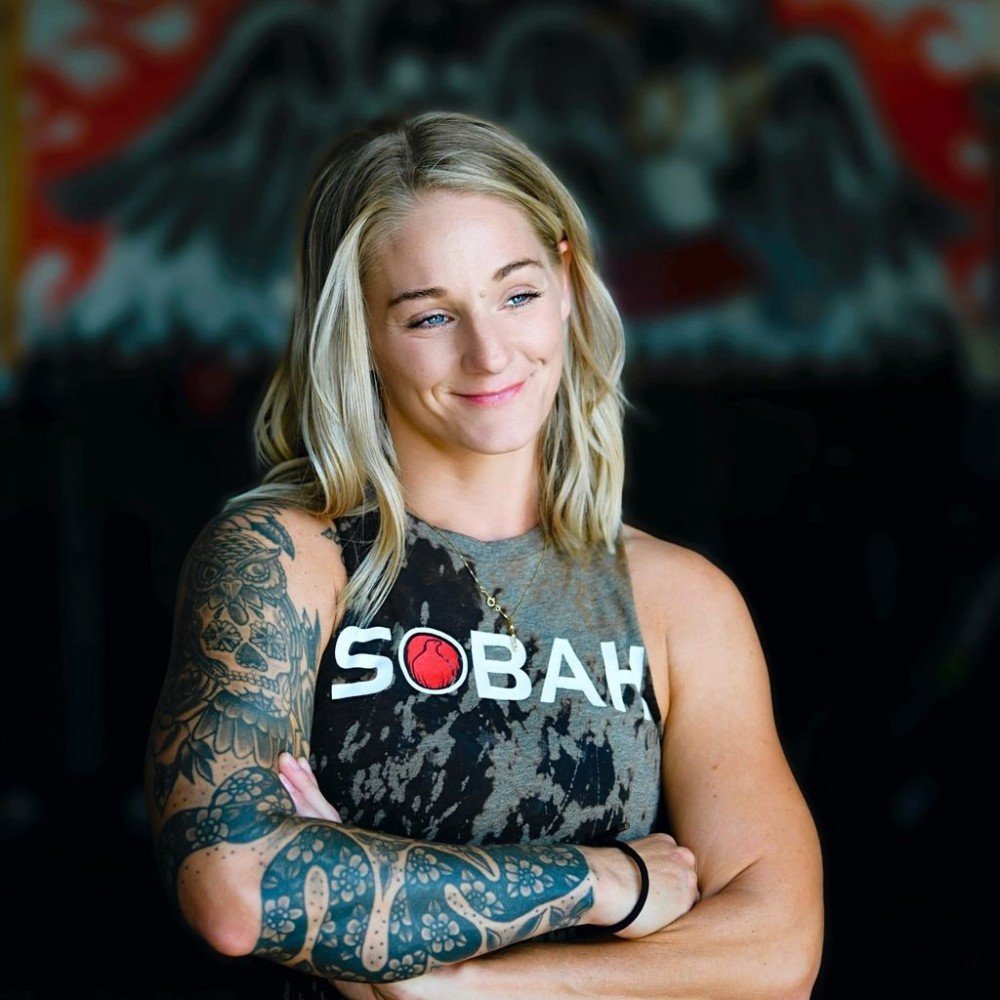
“I grew up in between bars and AA meetings. I knew both worlds existed. What I didn’t see was someone get sober and stay sober,” she said on a 2024 podcast. In that same episode–and often in conversations with the sober community–Tiffany openly shared that her father had overdosed. She was 19 at the time and actively using oxycontin, so she saw her father’s death as a clear truth that people don’t get better. A myth that she had long dispelled.
Then she overdosed.
Last month, I was in the middle of writing an email at my desk in my home office when my phone pinged with a text from my friend Andrea that read, “I have to tell you something.”
The words felt like a gentle knock on the door–an attempt to not be invasive while subtly asking, “Can I come in?”
It was unusual to hear from Andrea in the middle of the day, so I understood that what would follow was likely not good news.
“Are you pregnant?” I asked, attempting a joke.
“God NO!,” she said, then quickly followed up with, “Tiffany overdosed.”
My sister had overdosed a few years ago, but she survived. Whether I was using that framework to process the information or I was in complete denial, my brain did not compute Andrea’s words. When she called to tell me her account of what happened, I still believed Tiffany was alive. She had been sober for 13 years. Maybe she had relapsed, but there was no way she died from an overdose.
“Kim found her face down,” she said. A light wind ruffled the leaves on the maple tree outside my window.
“Oh man,” I said. “Where is she now?”
Andrea paused.
“Kacy, she died.”
Addiction is a real mind bender of a disease that defies the very logic and reason needed to understand that it is, in fact, a disease. The choices of those afflicted by substance abuse disorder don’t follow a logical pattern. The belief that someone can get better and stay better is worsened by hope. When someone is in recovery, there’s so much hope that they will continue to live a healthy life. With addiction, though, relapse is always possible.
I’m still looking for a reason that will make Tiffany’s death make sense. She was exalted in the sober community, a hero among those in early recovery to whom she didn’t dare reveal her own fragility. In return, the community didn’t make space for her to be vulnerable. Instead of asking others to show up for her when she needed it most, she turned to substances to cope with her demons.
Andrea and I hypothesized about why. A substance abuse clinician who is nearly a decade into her own sobriety, Andrea had seen signs. A break up, an injury, access to over the counter supplements like kratom.
“She went to detox last year, and I think she’s been struggling for a while, but she’s been keeping secrets which we know is deadly for an addict.” It was a secret she held close while she continued to try to show up as the Tiffany everyone expected her to be.
From the outside, her story had become a shining example of the mythical bird, able to rise from the ashes and live again. In the recovery world, she was a symbol, admired on a national scale. With that success, though, comes pressure and expectation. Perhaps her rise made her feel more like Icarus. As her wings melted, she descended and eventually fell.
The only requirement to attend any event at The Phoenix is 48-hours of continuous sobriety. Had Tiffany been adhering to that over the past year of her life? Rather than following the guidance she gave to so many other people, she was trying to show up as a role model while her life was secretly unraveling. No one knew it because she looked fine. It’s hard for most people to admit, “I’m not ok.” I imagine that being a leader was a trap that kept Tiffany from asking for help when she needed it most.
I wonder if the voice of her younger self who had lost her father convinced her that people don’t really get better and stay better. Or maybe, as people who struggle with addiction so often do, she assured herself and everyone around her that she had everything under control. Her appearance didn’t raise alarm bells. While I may never have answers, her death has made me think differently about what ‘ok’ means, what 'healthy' really looks like, and how we check in on people in our communities—especially those who are exalted for their accomplished roles.